Electronics and Communication Engineering
About Department
The Department of Electronics and Communication Engineering (ECE), established in 2008, offers a comprehensive undergraduate program in Electronics and Communication Engineering. The initial intake of 60 students has progressively increased to 180 by the year 2023, reflecting the department’s academic growth and demand. In addition, the department offers a postgraduate M.Tech. program in Embedded Systems and VLSI Design with an intake capacity of 18 students.
Aligned with its vision and mission, the department is supported by robust infrastructure and well-equipped laboratories. Students have access to licensed and industry-standard software tools such as Xilinx, Code Composer Studio, MATLAB, LABTEK, Microwind, NS-2, and MASM, enabling hands-on learning and the development of intelligent and embedded systems.
The department actively integrates cutting-edge technologies into the curriculum through NPTEL online courses, SWAYAM, FOSSEE and Spoken Tutorials by IIT Bombay, along with expert webinars conducted by Texas Instruments. Practical exposure is further strengthened through collaboration with National Instruments (NI), offering training in LabVIEW, and through workshops and internships organized in association with the Andhra Pradesh State Skill Development Corporation (APSSDC).
Students receive continuous technical mentoring and institutional support to participate in and excel at national-level competitions and challenges organized by reputed organizations such as National Instruments, Texas Instruments, Terasic Inc., DST, Intel, AICTE, and IIT Bombay. The department also facilitates industrial visits to premier research and space organizations including the National Atmospheric Research Laboratory (NARL) and Satish Dhawan Space Centre (SDSC-SHAR), providing valuable industry exposure and insights into emerging technologies.
The department is strengthened by a dedicated and highly qualified faculty team comprising 4 Ph.D. holders and 34 M.Tech. graduates, with specializations in VLSI Design, Communication Systems, Digital Electronics, Computer Systems, and Embedded Systems. Faculty members employ modern pedagogical approaches such as Smart Classrooms and ICT-enabled teaching tools to enhance student learning outcomes. Regular Faculty Development Programs (FDPs) conducted under NMEICT, along with workshops and conferences, ensure continuous professional development and promote high-quality research publications in reputed national and international journals.
Vision-Mission
Vision
- Achieving academic excellence in Electronics and Communication Engineering by shaping next-generation technocrats keeping pace with socio-economic needs
Mission
- M1: Adopting outcome oriented teaching-learning processes to provide comprehensive knowledge in the application of Electronics and Communication Engineering principles.
- M2: Striving for implementation of advanced technology to cater to industrial demands and societal concerns
- M3: Producing highly skilled and responsible professionals with robust ethical values
- M4: Integrating technical capabilities, life skills and entrepreneurship abilities to produce dynamic contributors to social advancement
PROGRAM EDUCATIONAL OBJECTIVES (PEOs)
Graduates of B.Tech in Electronics and Communication Engineering Programme shall be able to
- PEO1: Demonstrating a deep passion for continuous learning through technical expertise for a promising career
- PEO2: Exhibiting a strong commitment to serving the society with adherence to professional ethics
- PEO3: Managing resources efficiently as competent engineers through effective social interaction
- PEO4: Engaging in advanced learning and contributing to technological innovations
PROGRAM OUTCOMES (POs)
Engineering Graduates will be able to:
PO1. Engineering Knowledge : Apply the knowledge of mathematics, science, engineering fundamentals, and an engineering specialization to the solution of complex engineering problems.
PO2. Problem Analysis: Identify, formulate, review research literature, and analyze complex engineering problems reaching substantiated conclusions using first principles of mathematics, natural sciences, and engineering sciences.
PO3. Design/development of solutions: Design solutions for complex engineering problems and design system components or processes that meet the specified needs with appropriate consideration for the public health and safety, and the cultural, societal, and environmental considerations.
PO4. Conduct investigations of complex problems: Use research-based knowledge and research methods including design of experiments, analysis and interpretation of data, and synthesis of the information to provide valid conclusions.
PO5. Modern tool usage: Create, select, and apply appropriate techniques, resources, and modern engineering and IT tools including prediction and modeling to complex engineering activities with an understanding of the limitations.
PO6. The engineer and society: Apply reasoning informed by the contextual knowledge to assess societal, health, safety, legal and cultural issues and the consequent responsibilities relevant to the professional engineering practice.
PO7. Environment and sustainability: Understand the impact of the professional engineering solutions in societal and environmental contexts, and demonstrate the knowledge of, and need for sustainable development.
PO8. Ethics: Apply ethical principles and commit to professional ethics and responsibilities and norms of the engineering practice.
PO9. Individual and team work: Function effectively as an individual, and as a member or leader in diverse teams, and in multidisciplinary settings.
PO10. Communication: Communicate effectively on complex engineering activities with the engineering community and with society at large, such as, being able to comprehend and write effective reports and design documentation, make effective presentations, and give and receive clear instructions.
PO11. Project management and finance: Demonstrate knowledge and understanding of the engineering and management principles and apply these to one’s own work, as a member and leader in a team, to manage projects and in multidisciplinary environments.
PO12. Life-long learning: Recognize the need for, and have the preparation and ability to engage in independent and life-long learning in the broadest context of technological change.
PROGRAM SPECIFIC OUTCOMES (PSOs)
At the time of graduation, student of B.Tech in Electronics and Communication Engineering Programme shall be able to
- PSO1: Professional Skills: Design and develop electronic circuits and communication systems, applying the principles of signal, image processing, VLSI, Embedded and wireless applications relevant to industry and society
- PSO2: Software Knowledge: Adopting software tools like Matlab, Xilinx, Microwind, NS-2 to develop intelligent systems to offer customized solutions
Course Outcomes-2025-26 Even-Semester - view
Course Outcomes-2025-26 Odd-Semester - view
Course Outcomes-2024-25 Even-Semester - view
Course Outcomes-2024-25 Odd-Semester - view
Course Outcomes-2023-24 Even-Semester - view
Course Outcomes-2023-24 Odd-Semester - view
Course Outcomes-2022-23 Even-Semester - view
Course Outcomes-2022-23 Odd-Semester - view
Course Outcomes-2021-22 Even-Semester - view
Course Outcomes-2021-22 Odd-Semester - view
Course Outcomes-2020-21 Even-Semester - view
Course Outcomes-2020-21 Odd-Semester - view
Course Outcomes-2019-20 odd-Semester - view
Course Outcomes-2019-20 Odd-Semester - view
CO Attainment
PO Attainment
| S.No | Name of the Faculty | Designation | Qualification | Profile |
| 1. | Dr.K.Sravan Kumar | Professor & Vice Principal | Ph.D | VIEW |
| 2. | Dr.U.Penchalaiah | Professor, Dean of SA&H & HOD | Ph.D | VIEW |
| 3. | Dr.Ch.Amarnath Sarma | Associate Professor | Ph.D | VIEW |
| 4. | Dr.P.Joshna | Associate professor | Ph.D | VIEW |
| 5. | Mr. G. Kiran Kumar | Associate Professor | M. Tech, (Ph.D) | VIEW |
| 6. | Mr.G.Suresh | Associate Professor | M. Tech, (Ph.D) | VIEW |
| 7. | Mr.G.Shanmugavel | Associate Professor | M. Tech, (Ph.D) | VIEW |
| 8. | Ms.E.Prasanthi | Assistant Professor | M.Tech | VIEW |
| 9. | Ms.Sk.Haseena | Assistant Professor | M.Tech | VIEW |
| 10. | Mr. P. Sukumar | Assistant Professor | M.Tech | VIEW |
| 11 | Ms.GaliMounika | Assistant Professor | M.Tech | VIEW |
| 12. | Mr.Z.Chaitanya | Assistant Professor | M.Tech | VIEW |
| 13. | Ms.Sk.Haleemunneesa | Assistant Professor | M.Tech | VIEW |
| 14 | Ms.I.Medha Gayatri | Assistant Professor | M.Tech | VIEW |
| 15. | Mr.B.Suresh Kumar | Assistant Professor | M.Tech | VIEW |
| 16 | Ms.T. Divya likhita | Assistant Professor | M.Tech | VIEW |
| 17. | Mr.Shaik Arief | Assistant Professor | M.Tech | VIEW |
| 18. | Ms.B.Akhila | Assistant Professor | M.Tech | VIEW |
| 19. | Ms.GaggeraTejaswi | Assistant Professor | M.Tech | VIEW |
| 20. | Ms.PathanAsifa Khan | Assistant Professor | M.Tech | VIEW |
| 21. | Ms.Pullagura Bhargavi | Assistant Professor | M.Tech | VIEW |
| 22. | Ms.M.Suhasini | Assistant Professor | M.Tech | VIEW |
| 23. | Ms.K.Suneela | Assistant Professor | M. Tech, | VIEW |
| 24 | Ms.S.Lakshmi Prasanna | Assistant Professor | M.Tech | VIEW |
| 25. | Mr.M.K.Chakravarthy | Assistant Professor | M. Tech, (Ph.D) | VIEW |
| 26. | Ms.P.C.Navya Lalithya | Assistant Professor | M.Tech | VIEW |
| 27 | Ms.Sarada Musthi | Assistant Professor | M.Tech | VIEW |
| 28. | Ms.Eduru.Mercy | Assistant Professor | M.Tech | VIEW |
| 29. | Ms.Shaik.Arifa | Assistant Professor | M. Tech | VIEW |
| 30 | Mr.Ambati Hemantha Kumar | Assistant Professor | M. Tech | VIEW |
| 31 | Mr.Patan Wahid khan | Assistant Professor | M.Tech | VIEW |
| 32 | Mr.Shaik.Jafar Ameen | Assistant Professor | M. Tech | VIEW |
| 33 | Ms.Mullapudi Prathiba | Assistant Professor | M. Tech | VIEW |
| 34 | Mr.Leelapalli.Naveen | Assistant Professor | M. Tech | VIEW |
| 35 | Mr.T.Vinod Kumar | Assistant Professor | M.Tech | VIEW |
| 36 | Mr.Ande Siva Sai Kumar | Assistant Professor | M.Tech | VIEW |
| 37 | Ms.Kovuru Suryakala | Assistant Professor | M.Tech | VIEW |
| 38 | Ms.Lalam Sunitha | Assistant Professor | M.Tech | VIEW |
Laboratory
- Basic Simulation Laboratory
- Communication Systems laboratory
- Digital Electronics and Microprocessors interfacing Laboratory
- Electronic Devices and Circuits Laboratory
- Electronic Devices and Analysis Laboratory
- Integrated Circuits & Microwave Engineering Laboratory
- Project Laboratory
In Simulation Laboratory the SSSP Lab,Python Programming Lab and DSP -ML lab are coducted. The objective of this laboratory is to enable the students to acknowledge with basic signals, system responses and statistical properties of a random noise. SSSP (often referring to Systems and Signal Processing or System Simulation) labs are frequently conducted in a simulated, computer-based environment. using MATLAB.Python programming labs often incorporate simulations, either by using specific Python libraries to model real-world processes.Digital Signal Processing (DSP) and Machine Learning (ML) labs are commonly conducted in a simulation environment, primarily using software tools like MATLAB
Ambiance:
- Department has Full furnished laboratories with well equipped Computers which shall provide to UG courses as per curriculum.
- Simulation Laboratory is equipped with additional facilities to perform gap analysis of curriculum labs.
- Conditions of Computers are good. Each Student is provided individual computer and Desk in Lab.
- The lab is conducted and evaluated every week.
- Simulation Laboratory is equipped with sufficient hardware ,licensed and Open source software to run program specific curriculum and beyond curriculum.
- Laboratory manuals are distributed to students.
- Sufficient number of windows is available for ventilation and natural light and every lab has one exit.
- Lighting system is very effective, along with the natural light in each corner of the rooms.
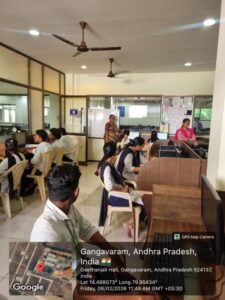
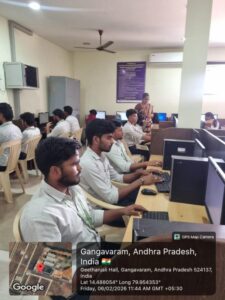
Communication Systems laboratory is offered to II B.Tech II semester ECE students. The objective of this laboratory is to understand various Modulation and Demodulation techniques in time domain and frequency domain, to Comprehend Analog, Pulse analog Modulation and Demodulation techniques, to impart hands on experience and train the students to analyze various base band and pass band modulation and demodulation techniques and understand their performance. This Lab provides practical hands-on exposure to communication system building blocks, such as filters, mixers, and amplifiers, and enables students to study the effects of noise on communication systems. This laboratory is well equipped with Analog communication trainer kits. This Lab provides impart hands on experience and train the students to analyze various base band and pass band modulation and demodulation techniques and understand their performance, to Comprehend various coding techniques on transmission medium in Digital communications. This laboratory is well equipped with Digital communication trainer kits.
Ambiance:
- Department has Full furnished laboratories with well equipped requirements which shall provide to UG courses as per curriculum.
- The laboratory is equipped with additional facilities to perform gap analysis of curriculum labs.
- Conditions of chairs/benches are in good condition. Chair with desk are provided for individual students in Labs.
- The lab is conducted and evaluated every week.
- Laboratory manuals are distributed to students.
- Sufficient number of windows is available for ventilation and natural light and every lab has one exit.
- Lighting system is very effective, along with the natural light in each corner of the rooms.
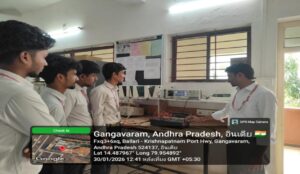
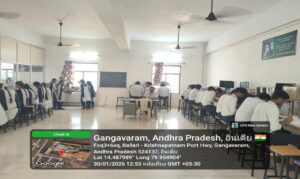
Digital Electronics and Microprocessors Lab is a specialized facility designed for undergraduate engineering students to gain hands-on experience in designing, building, and testing digital logic circuits and microprocessor-based systems. It serves as a practical, hardware-intensive space where theoretical concepts from Boolean algebra and computer architecture are implemented using physical trainer kits and ICs.
Below is the physical description of the laboratory setup:
1.Primary Hardware & Trainer Kits Digital IC Trainer Kits: These are the central units for digital experiments. They typically feature built-in DC power supplies (+5V,+12V), logic input switches (HIGH/LOW), LED indicators for output observation, clock pulse generators, and breadboard areas for IC insertion.
Microprocessor/Microcontroller Kits: The lab is equipped with trainer kits for various processors, such as 8085 (8-bit) and 8086 (16-bit) microprocessors, as well as 8051 microcontrollers.
Interfacing Modules: To demonstrate real-world applications, kits are interfaced with external hardware, including stepper motor controllers, A/D (Analog-to-Digital) converters, D/A (Digital-to-Analog) converters, seven-segment displays, and traffic light simulators.
Breadboards & Components: Assorted breadboards, connecting wires, and various 7400-series TTL ICs (AND, OR, NOT, NAND, NOR, Flip-flops) are available for assembling logic circuits.
2.Testing and Measurement Equipment
Cathode Ray Oscilloscopes (CRO) & DSO: Used to visualize waveforms, analyze timing diagrams, and measure signals.
Logic Analyzers/Probes: Used for troubleshooting and testing digital system logic levels.Function Generators: Used to provide clock signals to digital circuits.
Digital Multimeters: Used to measure voltage, current, and resistance.
3.Computing Facilities
Desktop Computers: Each workstation usually has a computer with simulation software such as XILINX, PSPICE, Tinkercad, or MATLAB for designing and verifying circuits before physical implementation.
Assemblers/Compilers: Software for writing, debugging, and uploading assembly language programs to the 8085/8086 kits.
4.Typical Layout & Infrastructure
Workbenches: The lab consists of several workstations, each designed to accommodate 2-4 students, equipped with at least one trainer kit, a CRO, and a multimeter.
Safety Equipment: ESD (Electrostatic Discharge) safe mats and wrist straps are often used to protect sensitive integrated circuits from damage.
Storage: Cabinets containing ICs, microcontrollers, interfacing peripherals, and connecting patch cords.
Key Activities Performed Digital Experiments: Verification of logic gates, construction of adders, subtractors, multiplexers, and counters.
Microprocessor Experiments: Assembly language programming for arithmetic operations, data sorting, and interfacing with peripheral devices.
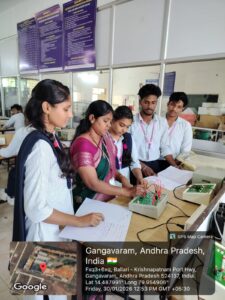
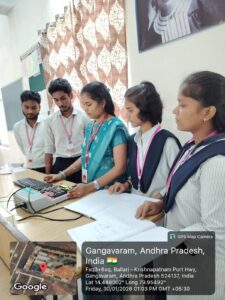
Electronic Devices and Circuits Laboratory is offered to B.Tech ECE, CSE, EEE and ME students to develop the fundamentals related to building blocks of analog electronic circuits. This lab helps the B.Tech students to gain practical experience with designing and implementing concepts of electronic devices and circuits such as diodes, transistor configurations, rectifiers, biasing circuits and amplifiers. The laboratory is equipped with Cathode Ray Oscilloscopes, Regulated Power Supplies, Function Generators and many other electronic components. This laboratory enables the students to gain practical experience in connecting and testing circuits with discrete components.
Ambiance:
- Department has Full furnished laboratories with well equipped equipments which shall provide to UG courses as per curriculum.
- The laboratory is equipped with additional facilities to perform gap analysis of curriculum labs.
- Conditions of chairs/benches are in good condition. Chair with desk are provided for individual students in Labs.
- The lab is conducted and evaluated every week.
- Laboratory manuals are distributed to students.
- Sufficient number of windows is available for ventilation and natural light and every lab has one exit.
- Lighting system is very effective, along with the natural light in each corner of the rooms.
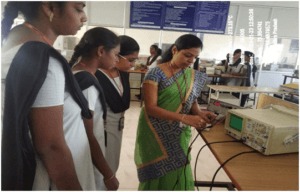
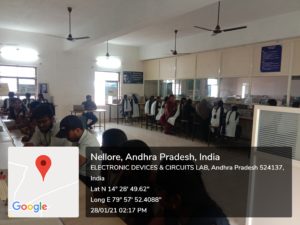
The Electronic Devices and Analysis Laboratory (EDAL) provides hands-on exposure to the principles, characteristics, and applications of electronic devices and circuits. The laboratory bridges the gap between theoretical concepts and real-time practical implementation, enabling students to analyze, design, and test basic electronic circuits using discrete components and simulation tools.
Electronics Design & Analysis Laboratory designed for ECE students to imparting the knowledge required to design the logic circuits by using necessary simulator (Micro wind 3.9 / digital schematics Simulator) to verify the logical / functional operation and to perform the analysis with appropriate synthesizer and then verify the implemented logic with the respective outputs.
PHYSICAL DESCRIPTION:
The Electronic Devices and Analysis Laboratory is a well-structured and spacious facility designed to support effective practical learning. The laboratory is adequately ventilated and illuminated, providing a safe and comfortable working environment for students.
The laboratory includes computer systems installed with standard electronic circuit simulation software to complement hands-on experimentation. Proper earthing, safety switches, and protective accessories are provided to ensure safe operation. Storage racks and display boards are used for organized placement of components, manuals, and lab records.
KEY ACTIVITIES:
- Construct complementary MOSFET logic circuits by using NMOS technology.
- Measure and interpret frequency response,Transient analysis,AC Analysis,DC Analysis
- Use simulation tools to validate experimental results.
- Apply Verilog code to the Micro wind software to provide the necessary layouts.
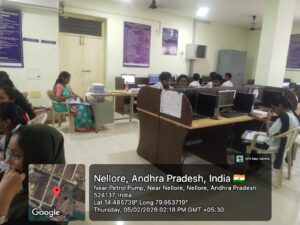
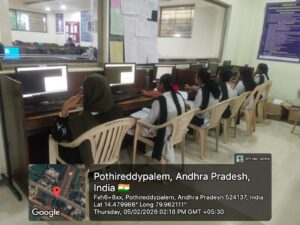
Integrated Circuits & Microwave Engineering Laboratory is provided with the equipment to Conduct IC Applications and Microwave & Optical Communications laboratories for B.Tech III Year I Semester & IV Year I Semester ECE Branch students Respectively. This laboratory aims at imparting the knowledge required to design and verify different analog circuits using Analog system Laboratory kit (ASLK PRO BOARD). This laboratory enables the III year students to study the various applications of Analog (Linear/Non-linear) ICs and their application. The Laboratory is equipped with ASLK (Analog System LAB Kit) PRO Trainer Board, Digital Storage Oscilloscope’s, Function generators and Regulated Power Supplies etc. The main objective of this Microwave & Optical Communications Lab is to gain the practical hands on experience by exposing the students to various microwave components such as Reflex klystron and Gunn diode, LED, LASER, passive devices like isolator, circulator, slotted section, directional coupler, horn antenna, attenuator and terminations etc., including frequency meter and VSWR meter and optical fibers to verify the characteristics of various microwave components using microwave test bench. This laboratory is also equipped with fiber optic trainer kits and modules to analyze the performance of both digital and analog optical fiber systems.
The Microwave and Optical Fiber Communication Laboratory provides hands-on exposure to advanced RF and photonic systems. In the Microwave Lab, students perform experiments on Reflex Klystron and Gunn diode characteristics, VSWR and impedance measurements, scattering parameters, antenna radiation patterns, and array analysis. Practical sessions include study of directional couplers, Magic Tee, Yagi-Uda antennas, and λ/2 and λ/4 dipoles. The Optical Fiber Lab covers characterization of LED and Laser Diode sources, numerical aperture measurement, intensity modulation, and data rate analysis of digital optical links. Students also evaluate transmission losses in analog optical systems. These experiments strengthen practical understanding of microwave engineering and fiber optic communication principles.
Ambiance:
- Department has Full furnished laboratories with well equipped equipments which shall provide to UG courses as per curriculum.
- The laboratory is equipped with additional facilities to perform gap analysis of curriculum labs.
- Conditions of chairs/benches are in good condition. Chair with desk are provided for individual students in Labs.
- The lab is conducted and evaluated every week.
- Laboratory manuals are distributed to students.
- Sufficient number of windows is available for ventilation and natural light and every lab has one exit.
- Lighting system is very effective, along with the natural light in each corner of the rooms.
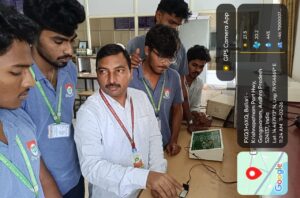
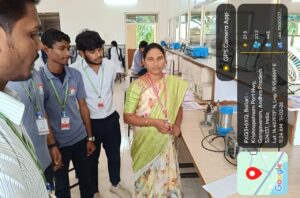
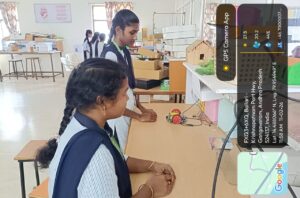
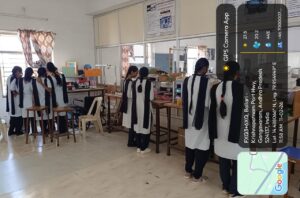
Department provides a dedicated space with technical support in the Project Laboratory for students and faculty to implement innovative ideas through mini projects and major projects to exhibit in various project Expos. This lab offers the students, the opportunity to gain valuable hands-on experience in engineering practices by conducting investigations, experiments, mini project and major projects using available modern facilities and also to contribute in the research. The primary purpose of this lab is to provide the resources to the students to complete their major project and mini projects. This lab serves as a meeting location for groups of students working on team projects.
Ambiance:
- Project laboratory consists of well configured systems, different IC’s bread boards, advanced project Modules like Aurdino Mega, Aurdino Uno, MSP430 Development tools,Texas instruments Kits, Zigbee Module and DSP Spatron kits.
- Sufficient number of windows is available for ventilation and natural light and every lab has one exit.
- Lighting system is very effective, along with the natural light in each corner of the rooms.
- Laboratory is kept open beyond working hours, if necessary.
VOE
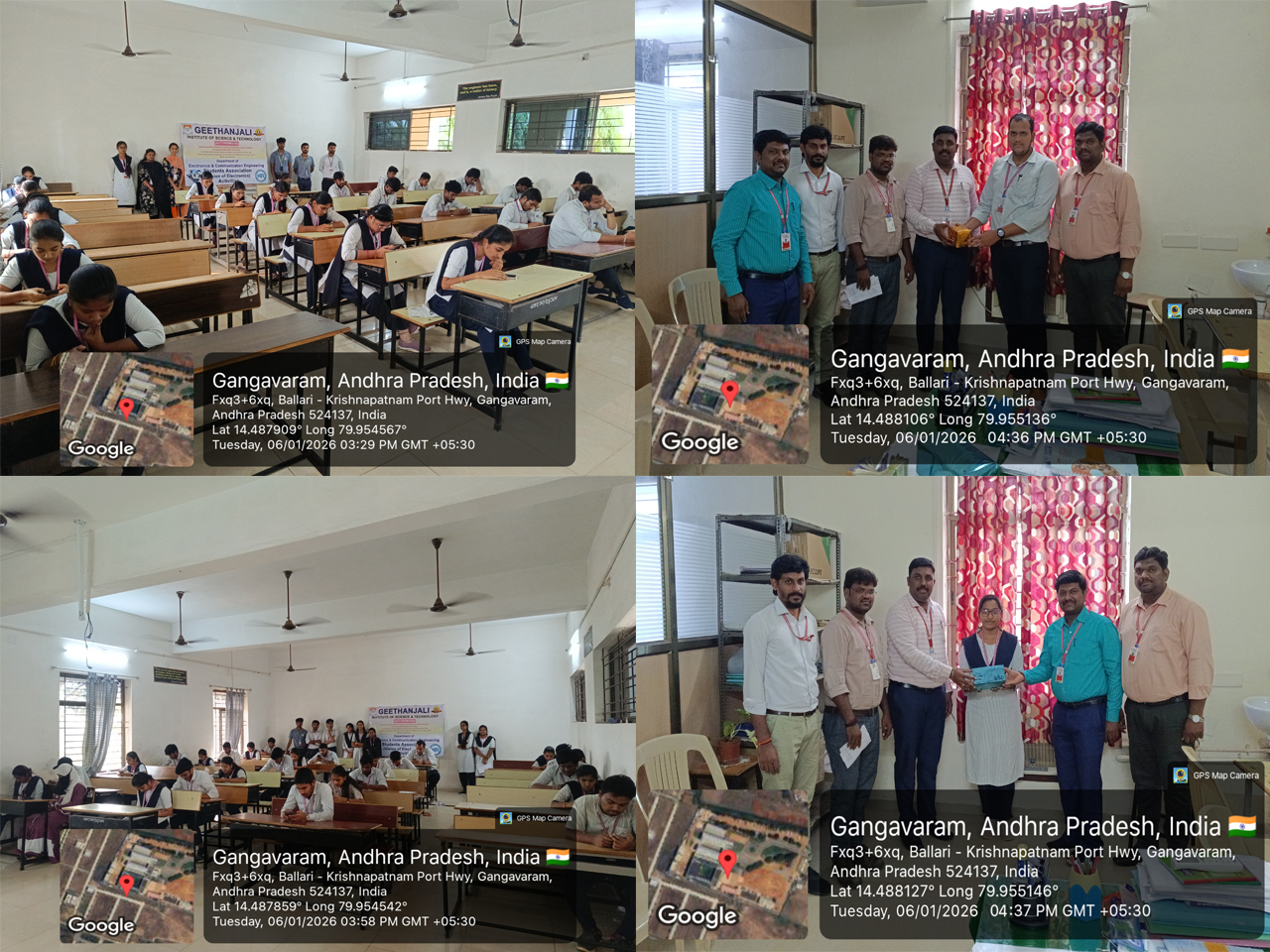
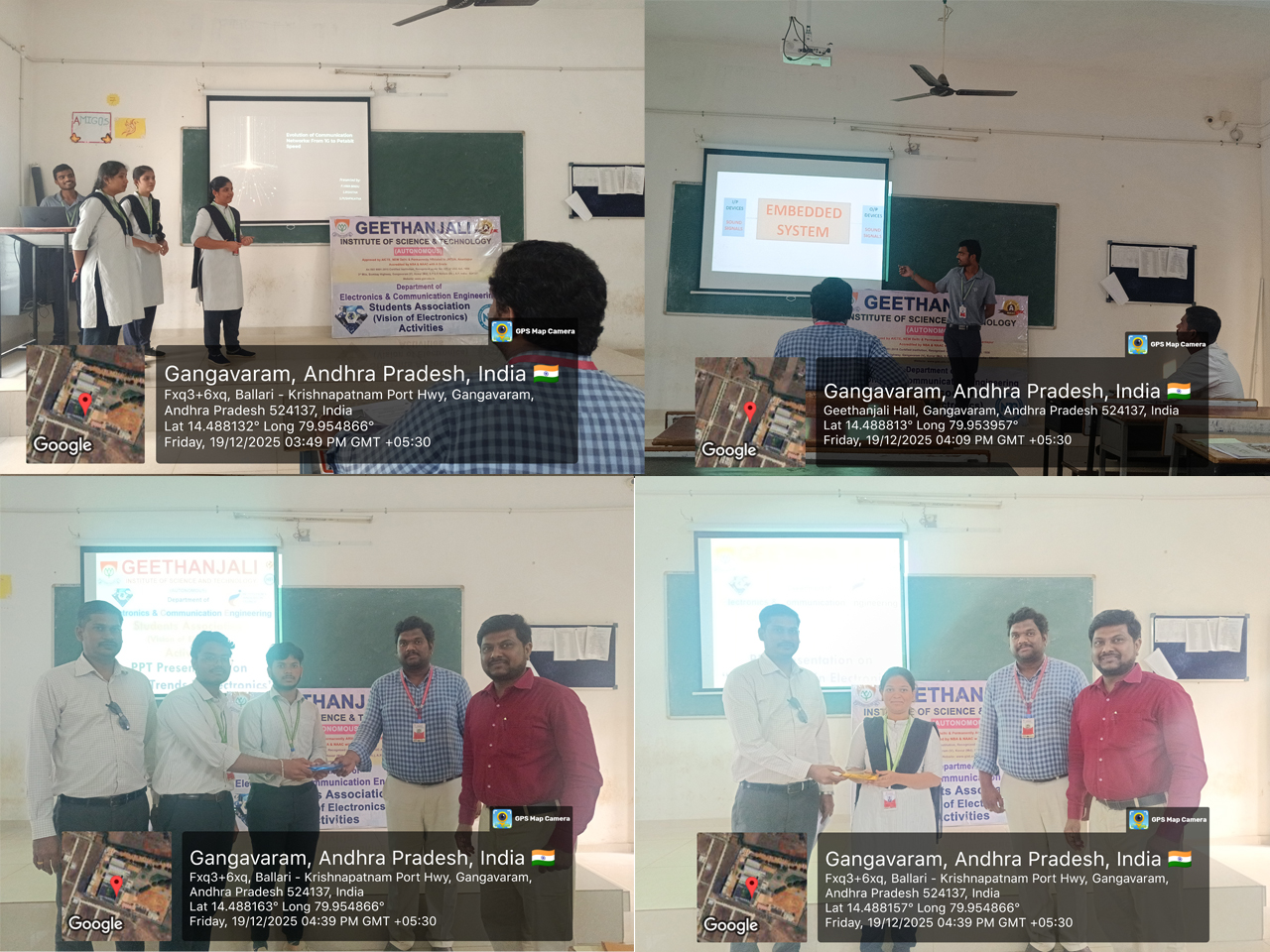
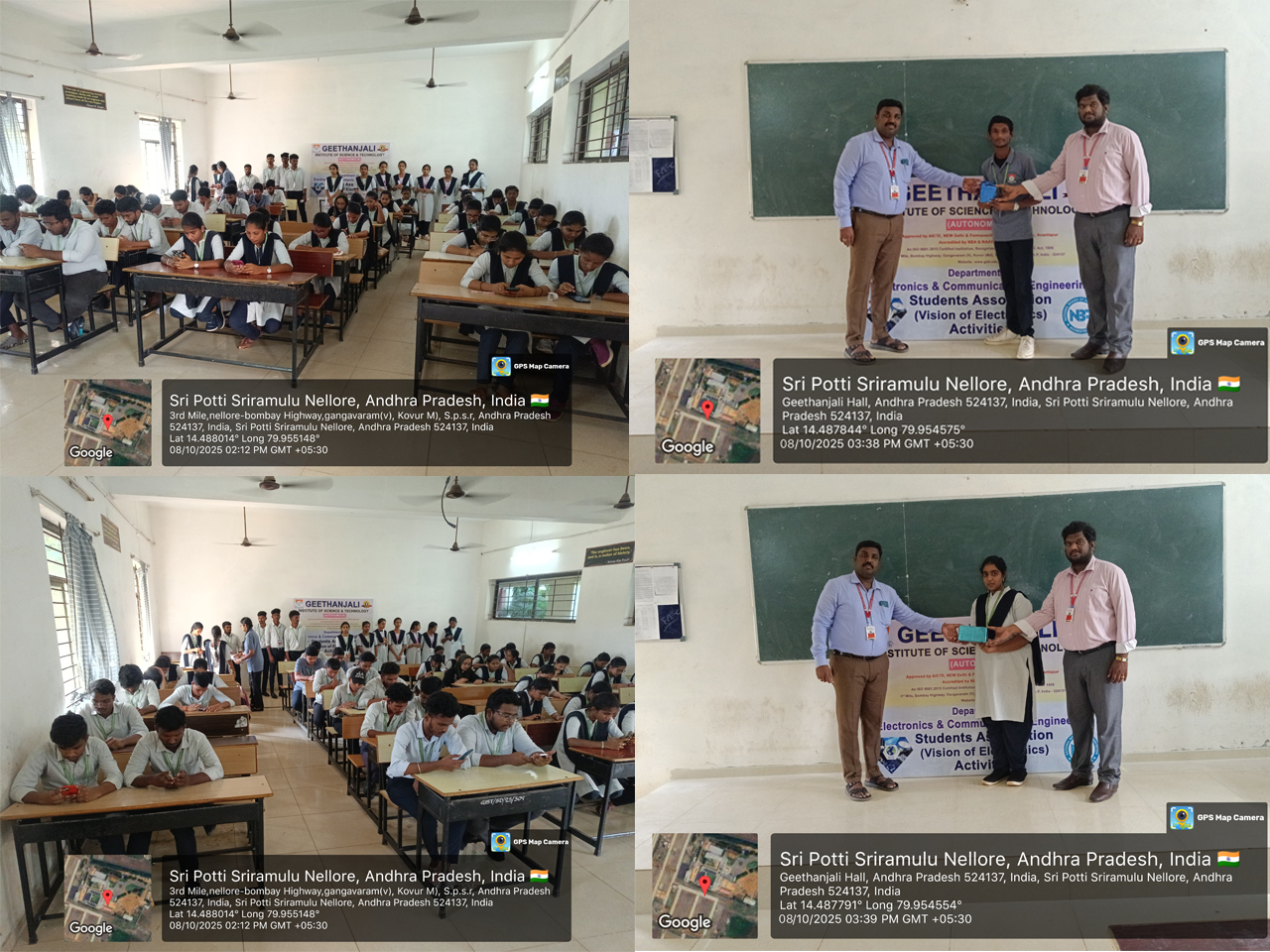
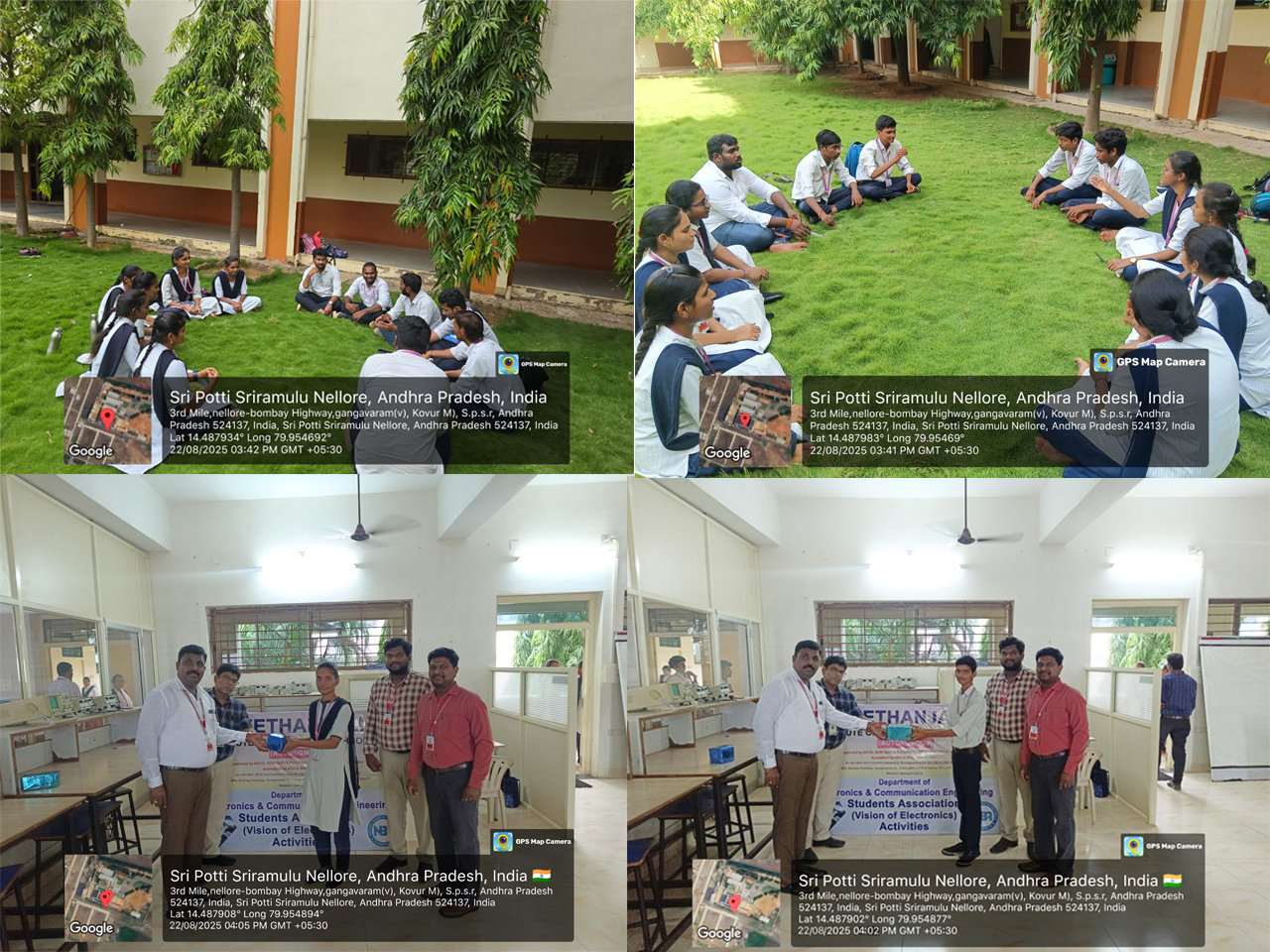
Vision of electronics (VOE) association is a brain child of the Department of Electronics and Communication Engineering which is intended for multidimensional technical skill development among students. Department of ECE had proposed to establish department association in the name of “VISION OF ELECTRONICS” (VOE) for the refinement of students to enrich their professional growth in a continuously improving environment. Academic Year: 2025-26 S. No. Position Organized Techno Crosswords competition on 06-01-2026 for II ECE students and distributed prizes for winners Organized PPT competition on 19-12-2025 for III ECE students and distributed prizes for winners Organized Technical quiz competition on 08-10-2025 for III ECE students and distributed prizes for winners Organized Technical quiz competition on 26-09-2025 for II ECE students and distributed prizes for winners Organized Group discussion competition on 22-08-2025 for II ECE students and distributed prizes for winners Vision of Electronics
Roles and responsibilities of the convener
Roles and responsibilities of Secretary
Roles and responsibilities of activity coordinator
Roles and responsibilities of student member
Name of the Member
Designation
1.
Dr. U. Penchalaiah
HoD ECE
Convenor
2.
Mr. A. Siva Sai Kumar
Assistant Professor
Secretary
3.
B. Manoj Kumar
Student
Member
4.
D. Sumanth
Student
Member
5.
B. Sabitha
Student
Member
6.
M. V. S. Sravya Hanvitha
Student
Member
7.
N. Harshitha
Student
Member
8.
B. Harsha Vardhan
Student
Member
9.
K. Lahari
Student
Member
10.
A. Bhavesh
Student
Member
11.
I. Naga Nandini
Student
Member
12.
P. Susanth
Student
Member
13.
P. Sindhuja
Student
Member
14.
T. Mohith Narasimha
Student
Member
15.
V. V. Lakshmi Varshitha
Student
Member
 An Awareness Poster on CORONA Pandemic Had Prepared By ECE Students as a Part of Student Association Activity
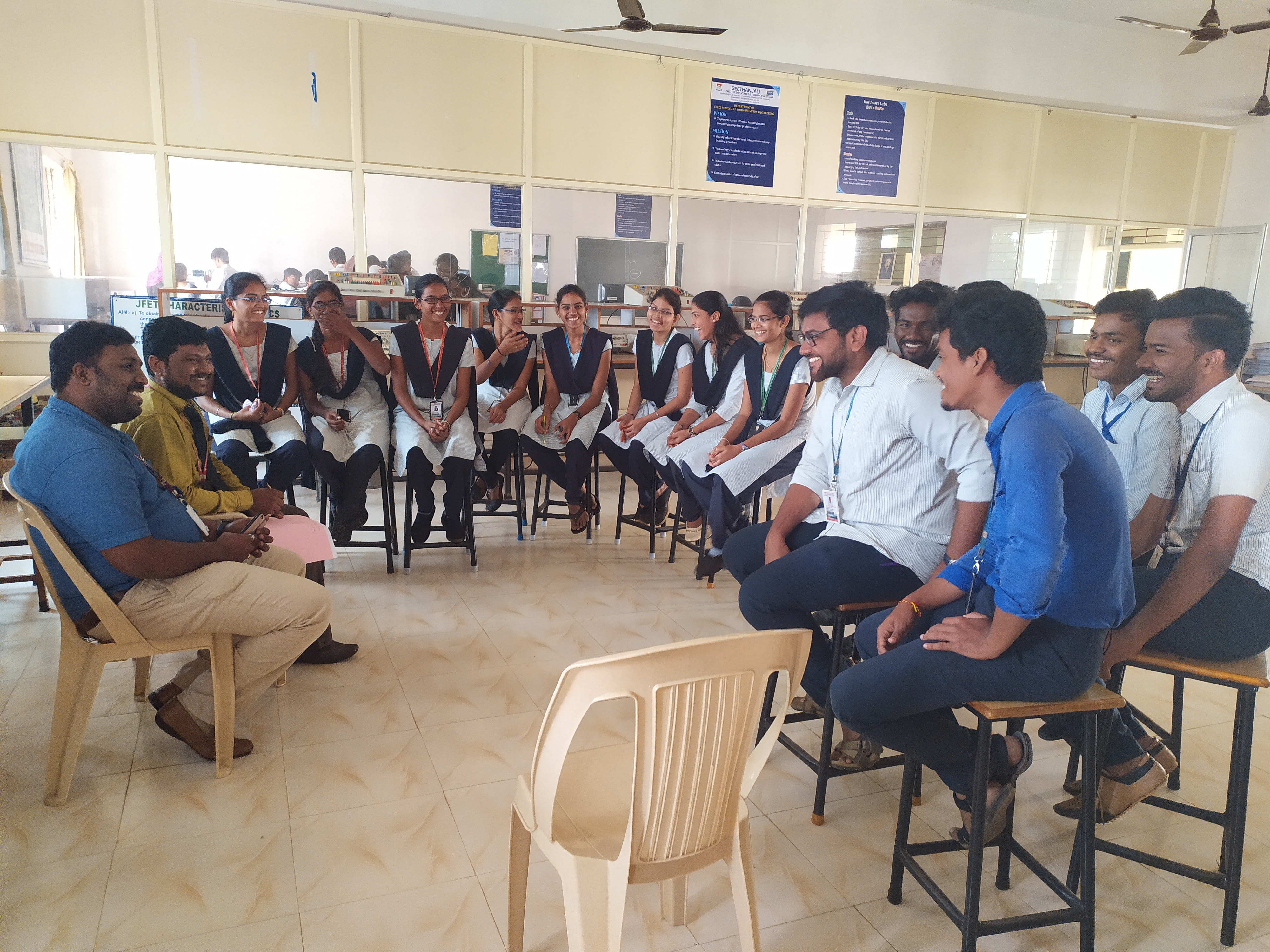 VOE meeting held on 22nd January 2020 at EDC lab
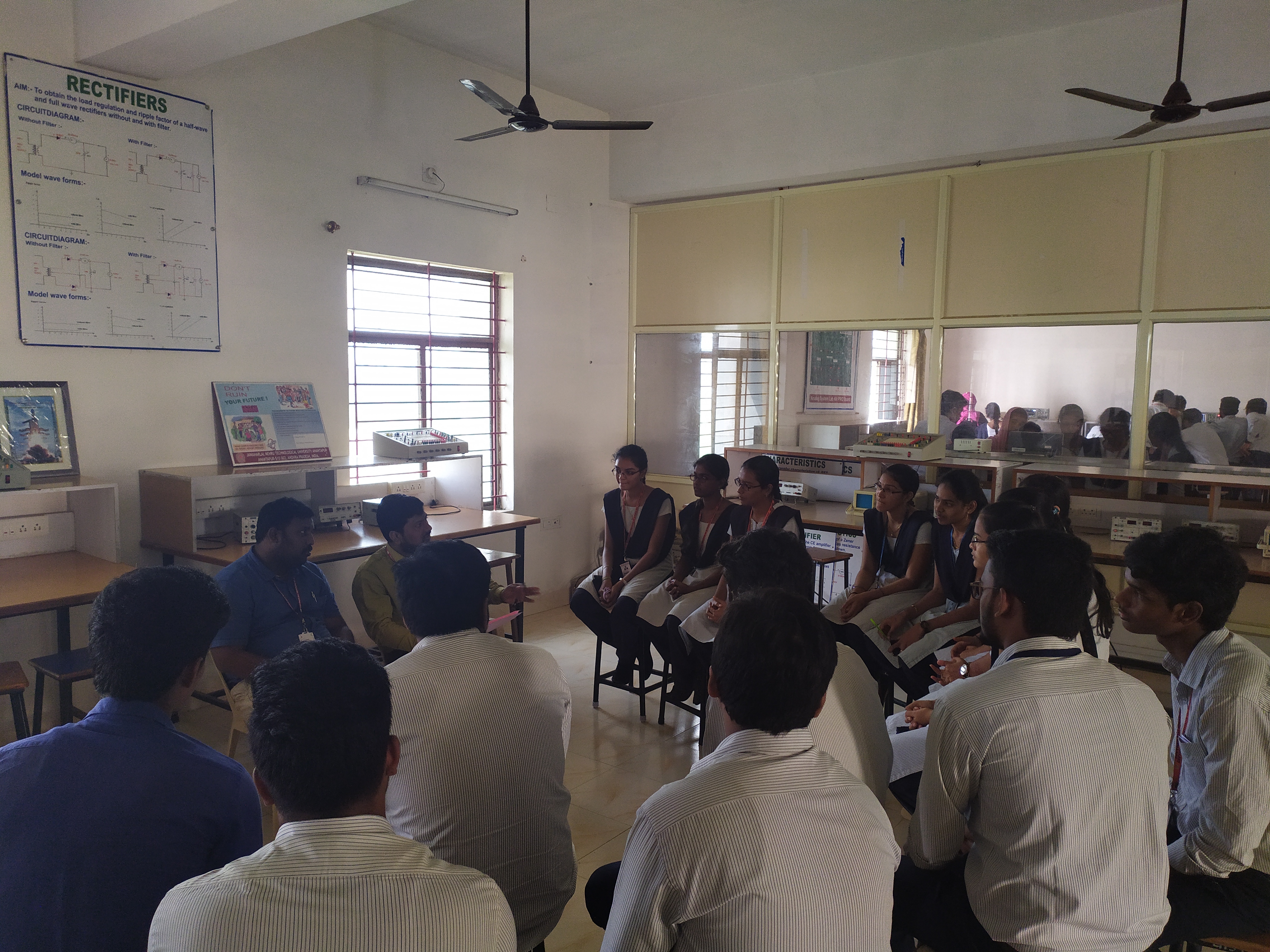 VOE meeting held on 22nd January 2020 at EDC lab
 Won first prize in paper presentation at SRUJANA-2k18 in GIST on 13 APR2018
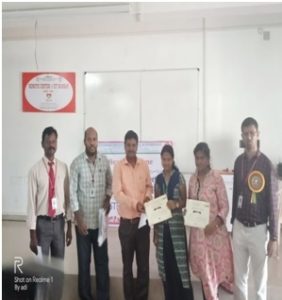 Won second prize in poster presentation at GISTECHFEST-2k19 in GIST on 21 MAR 2019
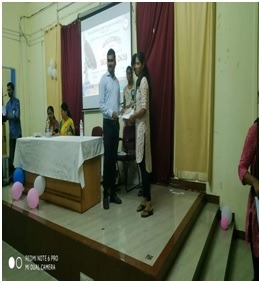 Won first prize in paper presentation at SIGMOID-2k19 in SV University on 25 MAR 2019
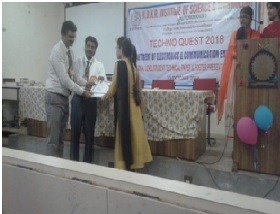 Won third prize in paper presentation at TECHNOQUEST-2k18 in NBKR on 13 NOV 2018
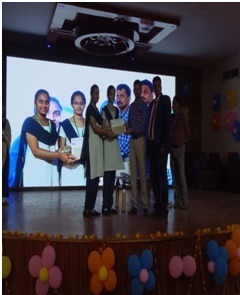 Won second prize in paper presentation at TECHFEST-2k19 in Audisankara College on 18 OCT 2019
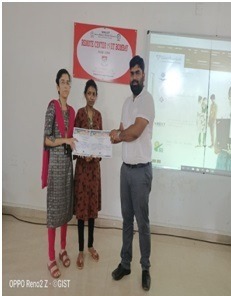 Won first prize in paper presentation at SRUJANA-2k18 in GIST on 13 APR, 2018
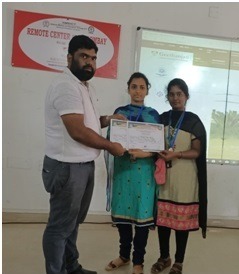 Won first prize in poster presentation at SRUJANA-2k18 in GIST on 13 APR, 2018
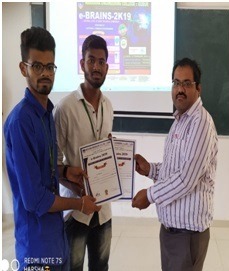 Won first prize in poster presentation at e-brains -2k19 in Narayana Engineering College on 23 FEB, 2019
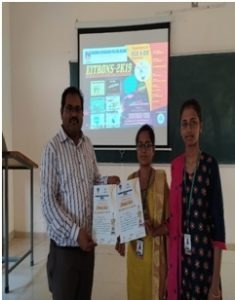 Won third prize in paper presentation at EITRONS-2k19 in Narayana engineering College on 18 OCT 2019
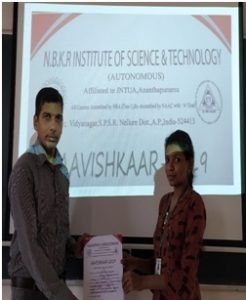 Won first prize in paper presentation at AAVISHKAR-2k19 in NBKR Institute of science and technology on 29JAN 2019
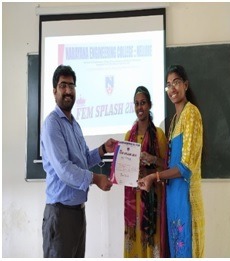 Won first prize in poster presentation at FEMSPLASH in NEC on 23 FEB, 2019
ECE STUDENT PARTICIPATION IN COCURRICULAR ACTIVITIES – view
STUDENT PARTICIPATION IN PAPER & POSTER PRESENTATION – view
STUDENT ACHIEVEMENTS DEPT OF ECE – view
VOE DEPARTMENT STUDENT ASSOCIATION ACTIVITIES 2019-2020 – view
Student Other Co-curricular Activities – view
Student Paper and Poster Presentations – view
Student Training & Workshops – view
Functional MOUs with Department of ECE
|
S.No |
Name of the Company | Areas of Collaboration’s | Date Validity |
Duration |
| 1. | APSSDC, Vijayawada
|
Trainings, Internships | permanent | Not Applicable |
| 2. | SAK Informatics,
Hyderabad. |
Trainings, Internships | 08-02-2028 | 5 Years |
| 3. | Sri Shasha Prayathi
Technologies Pvt.Ltd, Mangalore |
Training, Internships | 17-11-2027 | 5 Years |
| 4. | Technotran Pvt.Ltd,
Nellore |
Training, Internship | 07-08-2028 | 5 Years |
SAK Informatics,HYD – view
Sri Shasha Prayathi Technologies Pvt.Ltd – view
Technotron Technologies – view
Internships
Internships Organised for-AY-2025-26 – view
Internships Organised for-AY-2024-25 – view
Internships Organised for-AY-2023-24 – view
Internships Organised for-AY-2022-23 – view
Internships Organised for-AY-2021-22 – view
Internships Organised for-AY-2020-21 – view
Internships Organised for-AY-2019-20 – view
Roll of Honour
|
S.NO |
BATCH | ROLL NO | NAME OF THE STUDENT |
OVERALL %/ CGPA |
| 1. | 2008-2012 | 082U1A0404 | BHAVYA KARNATI | 81.70 |
| 2. | 2009-2013 | 092U1A0473 | PATHIPATI SIDHU | 82.96 |
| 3. | 2010-2014 | 102U1A0402 | A.V.SIRI CHANDANA | 84.70 |
| 4. | 2011-2015 | 112U1A0498 | SR AVAMGARI YASODA | 82.02 |
| 5. | 2012-2016 | 122U1A0471 | KONDA SAILAJA | 83.92 |
| 6. | 2013-2017 | 132U1A0490 | PAYYAVALA KAMAKSHI | 88.80 |
| 7. | 2014-2018 | 142U1A0425 | GUNDALA VEENA REDDY | 80.86 |
| 8. | 2015-2019 | 152U1A0443 | GUNDALA DIVYA REDDY | 9.18 |
| 9 | 2016-2020 | 162U1A0461 | JADAPALLI MALATHI | 8.86 |
| 10 | 2017-2021 | 172U1A0451 | SWAROOPA BELLAM | 8.93 |
| 11 | 2018-2022 | 182U1A04E1 | SHAIK SABREEN | 9.02 |
| 12 | 2019-2023 | 192U1A0428 | EEDALA SIVA POOJITHA | 8.75 |
| 13 | 2020-2024 | 202U1A0431 | DASARI VANDANA | 8.78 |
| 14 | 2021-2025 | 212U1A0419 | CHEMUKULA SIREESHA | 9.00 |
2022-23
2021-22
2020-21
2019-20
2018-19
2017-18
2016-17
2015-16
2014-15
2022-23
2021-22
2020-21
2019-20
2018-19
2017-18
2016-17
Contact
Dr. U. Penchalaiah M. Tech, Ph.D.
Professor & Head
Department of Electronics and Communication Engineering
Geethanjali Institute of Science and Technology
Contact: +91-8015656228
Email: ecehod@gist.edu.in