Innovation and Entrepreneurship Development Cell (IEDC)
Innovation and Entrepreneurship Development Cell
Innovation and Entrepreneurship Development Cell (IEDC) was established in Geethanjali Institute of Science and Technology with a view to foster the entrepreneur skills among the students. The purpose of this cell is to support the students to transform their innovative ideas into new products and to envisage the direction, objectives, means, methods and practices pertaining to teaching-learning environment. The cell assists all the aspirants with mentoring, planning and execution of their innovative start up idea into a real business. The cell also organizes different activities and events from time to time to train and motivate the students on entrepreneurship and incubate the students ideas into concrete projects to bring up business proposals, resulting transformation from the position of job seekers they get ordained as job givers.
Functions
- To assist all the aspirants with mentoring, planning and execution of their start up idea into a real business.
- To conduct Entrepreneur Development Awareness programs in association with MSMEs and real entrepreneurs.
- To create strategic partnerships with various reputed organizations working to promote innovation.
- To arrange visits to industries for prospective entrepreneurs.
- To develop and encourage interdisciplinary student and staff projects.
- To function as an institutional body to facilitate various services by providing information to budding entrepreneurs.
- To organise activities such as training camps, awareness campaigns etc. in co-ordination with other committees.
- To develop various skills among students required for successful implementation of ideas.
- To provide infrastructure facilities and technical support for incubation of the ideas.
- To conduct competitions among students in developing project proposals.
- One room for IEDC with good infrastructure to conduct the committee meetings and discuss about the activities.
- E-Yantra Embedded Systems & Robotics Lab with FireBird V 2560 and Spark V Robot kits to incubate the ideas.
- National Innovation and Startup Policy ( click here ) for students and faculty in association with MoE Innovation Cell (MIC) to promote student driven start-ups.
- Institution’s Innovation Council (IIC) under MHRD’s Innovation Cell to promote innovation activities among students.
- Seminar hall to organize awareness programs and workshops related to cell.
AY 2025-26
|
S.No |
Name | Designation/Department |
Position |
| 1 | Dr. G. Subba Rao | Director | Chairman |
| 2 | Dr. P. Chakrapani | Dean, IIII | Convener |
| 3 | Dr. Ch. Sreenivasa Rao | Professor/ME | Member |
| 4 | Mr.G. Shanmugavel | Associate Professor/ECE | Member |
| 5 | Mrs. D. Suma Lalitha | Assistant Professor/S&H | Member |
| 6 | Ms.L. Indumathi Devi | Assistant Professor/CE | Member |
| 7 | Ms.P. Sravani | Assistant Professor/CSE | Member |
| 8 | Ms. Teesadevis | Assistant Professor/CSE allied | Member |
| 9 | Mr. Sriram Vamsikrishna | Student/CSE | Member |
| 10 | Ms. V.Kavya Sailaja | Student/CSE | Member |
| 11 | Ms. Chandra.Harshitha | Student/CSE (AIML) | Member |
| 12 | Mr. B. Sandeep | Student/CSE (AIDS) | Member |
| 13 | Ms. Talapala Nikhitha Sri | Student/ECE | Member |
| 14 | Mr. Kottu Raja | Student/ME | Member |
| 15 | Mr. Sk. Samad | Student/EEE | Member |
| 16 | Mr. A. Karthik | Student/CE | Member |
AY 2024-25
|
S.No |
Name |
Designation/Department |
| 1 | Dr.Sundeep Kumar K | Professor/CSE |
| 2 | Dr.P.Chakrapani | Professor/Management |
| 3 | Er.G.Shanmugavel | Associate Professor/ECE |
| 4 | Dr.Sreenivasa Rao | Professor/Mech |
| 5 | Ms. D. Suma Lalitha | Assistant Professor/Management |
| 6 | Dr.K.Sravan Kumar | Professor/ECE |
| 7 | Ms. L. Indumathi Devi | Assistant Professor/Civil |
| 8 | Mr. P.Naga kondaiah | Assistant Professor/EEE |
| 9 | Mrs.Teesa Davis | Assistant Professor/AIML |
| 10 | Mrs.Sk.Rakheeba | Assistant Professor/CSE |
| 11 | Mr.T.Harsha | Assistant Professor/CSE |
| 12 | Mr. Avvari Dhanusha | Student/CSE: 222U1A0506 |
| 13 | Mr. G. Boddu Penchal Rao | Student/CSE: 222U1A0516 |
| 14 | Ms. MANTHU YASWANTHI | Student/ECE: 222U1A0466
|
| 15 | Ms. Amilya | Student/EEE: 232U1A0213 |
| 16 | Mr. Sk. Sanwar Basha | Student/CE: 212U5A0127 |
| 17 | Mr. S.V. Sai Kiran Vithesh | Student/ME: 212U5A0334 |
Roles & Responsibilities of Convener
- He plans the IEDC regular activities and Entrepreneurship awareness programmes.
- He encourages members to organize department level programmes with regards to IEDC.
- He does planning of the yearly chart of activities and ensures the execution takes place smoothly with the help of members and student coordinators.
- He gives instructions and guidelines to the committee members to organize all the yearly activities with proper schedule.
- He conducts meetings twice a year and discusses how were the prior programmes and How the upcoming programmes should be done.
- He supervises the working of IEDC volunteers.
- He maintains the necessary files.
- He liaises with the officials of the district and state level entrepreneurship departments for IEDC projects and activities.
- He convenes the meeting of the IEDC committee in consultation with the Principal and also attends the external meetings which relate to the entrepreneurship programmes.
- He is responsible for the equipment and stores purchased out of IEDC funds. He hands over the charge of IEDC equipment and stores to his/her successor at the end of his/her tenure.
Roles & Responsibilities of Faculty Members
- They executethe yearly chart of activities at the department level as per the instructions of the convener.
- They motivate students to participate in IEDC activities.
- They ensure department level execution of the IEDC activities.
Roles & Responsibilities of Student Members
- Understand the procedure to establish Start-ups.
- Understand how their innovative ideas transform into new products or services.
- Understand the government organizations like MSME motives and funding facilities to support their projects.
IEDC_2024-25 - view
IEDC_2023-24 - view
IEDC_2022-23 - view
IEDC_2021-22 - view
IEDC_2020-21 - view
Events AY: 2025-26
Report on Entrepreneur’s Roadmap A Guide to Building Your Business
Report on One-Day Workshop on “Idea Generation & Validation”
Report on Entrepreneurship Day
Report on Entrepreneurship & Innovation Outreach Program
Report on orientation Program Ignite 9.0 & and AIC-SKU visit
Report on Entrepreneurship Readiness Camp (Srujana Shibir)
Events AY: 2024-25
Pre-incubation_agreement-NUTRIHOUSE
REPORT ON EXPERT TALK ON PROCESS OF INNOVATION DEVELOPMENT
|
S.No |
Date | Name of the Event |
No of Participants |
| 1 | 12-09-2023 | Entrepreneurship an Innovation | 400 |
| 2 | 22-12-2023 | IGNITE 6.0 | 39 |
| 3 | 05-02-2024 to 06-04-2024 | Ignite 6.O - Online training on entrepreneurship by AIC SKU | 39 |
| 4 | 30-09-2023 | Innovation and Startups | 50 |
| 5 | 18-04-2022 to 04-06-2022 | Acharya 3.0-FDP on Entrepreneurship | 6 |
| 6 | 25-05-2022 | Workshop on Start-up and Incubation | 300 |
| 7 | 04-06-2022 | IMC Pitch Day at AIC-SKU | 6 Colleges |
| 8 | 20-06-2022 | IGNITE-3.0 | 25 Teams |
| 9 | 20-06-2022 | IGNITE-3.0 | 5 Teams |
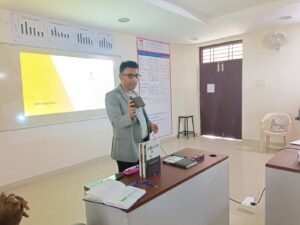
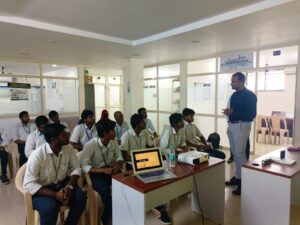
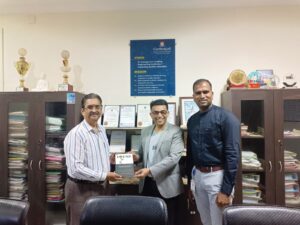
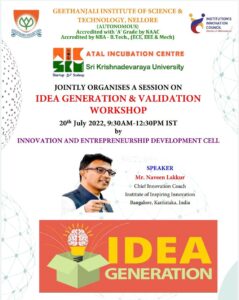
| 10 | 20-07-2022 | Workshop on Idea Generation and Validation | 5 Teams |
E -YANTRA EMDEDDED SYSTEMS & ROBOTICS LAB
About:
E-Yantra Project is an initiative by IIT Bombay that aims to create the next generation of embedded systems engineers with a practical outlook to help provide practical solutions to some of the real-world problems. The Ministry of Human Resource Development (MHRD) sponsors e-Yantra under the National Mission in Education through ICT (NMEICT) program. IIT Bombay envisages the E-Yantra platform to harness the intellectual talent of young India to create utility based robotic applications for usage across variety of applications such as: agriculture, manufacturing, defence, home, city maintenance and services industries. The overall mission is to grow a rich eco-system of ideas and applications that can propel India’s growth curve and productivity through intelligent funnelling of robotics in daily living built upon an existing pool of knowledge developed by students working on such projects at engineering colleges in the area of embedded systems and robotics.
Benefits to students:
- Awareness of embedded systems, robotics technology and mechatronics.
- It provides platform to design, develop, program and test of robots to various applications.
- Students can participate in national and international robotics competitions.
- Improve B.Tech projects with help of e-Yantra open source community.
- Encourage to use robots to solve real life problems.
Equipment:
Fire Bird V 2560
Fire Bird V is designed by NEX Robotics and Embedded Real Time Systems lab, CSE IIT Bombay. Fire Bird V will help you get acquainted with the world of robotics and embedded systems. Fire Bird V Robotic Research Platform provides an excellent environment for experimentation, algorithm development and testing. Its modular architecture allows you to control it using multiple processors such as 8051, AVR and ARM7 etc. Modular sensor pods can be mounted on the platform as dictated by intended applications.
Fire Bird V adopts ‘Open Source Philosophy’ in its software and hardware design. Precision position encoders makes it possible to have accurate position control. Platform can be upgraded to tank drive, Hexapod or any other desired form very easily.
Spark V Robot
Spark V Robot is a low cost robot designed by NEX Robotics with Department of Computer Science and Engineering, IIT Bombay. Spark V Robot is based on ATMEGA16A microcontroller and onboard intelligent battery charger. Robot has 3 analog white line sensors, 3 analog IR Proximity sensors, 3 directional light intensity sensors, battery voltage sensing, TSOP1738 IR receiver for TV remote control and Position encoders. Robot has support for 3 MaxBotix EZ series ultrasonic range sensors and support for the servo mounted sensor pod which can be used to make 180 degrees scan for the map making.
Robot has 2×16 alphanumeric LCD, Lots of LED indicators for quick debugging, Buzzer etc. Robot gives top speed of 15cm to 20cm per second depending on the model. Robot has onboard socket for XBee wireless module for multi robot and robot to PC communication. Firmware (.hex file) is loaded on the robot using Bootloader Utility from NEX Robotics.
| S. No. | Name of the Equipment | Quantity |
| 1 | FireBird V 2560 | 4 |
| 2 | Spark V Robot | 5 |
| 3 | Fire Bird V P89V51RD2 adapter card | 4 |
| 4 | Fire Bird V LPC2148 adapter card | 4 |
| 5 | P89V51RD2 Development Board | 2 |
| 6 | Raspberry-Pi 3 | 1 |
| 7 | NRF24L01 | 2 |
| 8 | Zigbee Modules 100m range | 6 |
| 9 | Zigbee Modules Adapter | 6 |
| 10 | Metal-gear Servo Motors | 10 |
| 11 | Servo Motor Based Gripper kit | 2 |
| 12 | Sharp GP2Y0A21YK0F infrared sensor | 5 |
Institution’s Innovation Council (IIC) – An Initiative of Ministry of Education
The Institution’s Innovation Council (IIC) is an initiative launched by the Ministry of Education’s Innovation Cell (MIC) to systematically promote innovation, entrepreneurship, and start-up culture among higher educational institutions (HEIs) in India. The IIC framework aims to create a vibrant local innovation ecosystem and foster a culture of innovation through structured activities.
Functions of the Institution’s Innovation Council (IIC)
- Promoting Innovation & Startups: Encouraging students and faculty members to develop innovative ideas and establish startups.
- Collaboration & Networking: Building networks with industry, academia, and government bodies to facilitate knowledge-sharing and mentorship.
- Capacity Building & Training: Conducting workshops, training programs, and awareness sessions on innovation, entrepreneurship, and intellectual property rights (IPR).
- Competitions & Hackathons: Organizing innovation challenges, hackathons, ideathons, and boot camps to foster problem-solving skills.
- Monitoring & Evaluation: Assessing the impact of innovation-related initiatives and improving institutional policies accordingly.
- Funding & Incubation Support: Facilitating access to grants, seed funding, incubation centers, and venture capital for promising startups.
- Integration with National Missions: Aligning innovation efforts with national programs like Atal Innovation Mission (AIM), Startup India, Make in India, and Digital India.
Objectives of the Institution’s Innovation Council (IIC)
- To create a sustainable innovation ecosystem in educational institutions.
- To develop an entrepreneurial mind set among students and faculty.
- To promote interdisciplinary research and knowledge exchange.
- To facilitate industry-academia linkages for collaborative innovation.
- To integrate innovation and start-up culture into the academic framework.
- To provide mentorship and guidance for idea validation, prototype development, and commercialization.
- To align institutional innovation efforts with global best practices and national innovation policies.
Deliverables of Institution’s Innovation Council (IIC)
– Establishment of a structured Innovation & Start-up Policy in the institution.
– Organizing minimum four innovation & entrepreneurship-related activities each academic year.
– Participation in national and international innovation challenges.
– Setting up pre-incubation and incubation facilities within the institution.
– Submission of innovative ideas and prototypes for funding opportunities.
– Building intellectual property (IP) portfolios by supporting patent filings.
– Publishing innovation reports and success stories of start-ups.
– Encouraging students and faculty to engage in technology transfer and commercialization.
Roles & Responsibilities of the Convener of IIC
The Convener is the head of the Institution’s Innovation Council and is responsible for its overall planning, execution, and success.
Key Responsibilities:
– Providing strategic direction and ensuring the smooth functioning of IIC activities.
– Acting as the liaison between the institution, government bodies, and industry partners.
– Identifying and mobilizing resources, including funding and mentorship support.
– Supervising and monitoring the implementation of IIC initiatives.
– Conducting periodic meetings and reviewing the progress of innovation programs.
– Ensuring compliance with Ministry of Education guidelines.
– Encouraging the active participation of faculty and students in innovation-related activities.
– Promoting a culture of entrepreneurship within the institution.
Roles & Responsibilities of Faculty Members in IIC
Faculty members play a crucial role in guiding and mentoring students toward innovation and entrepreneurship.
Key Responsibilities:
– Organizing and conducting workshops, seminars, and training programs on innovation and startups.
– Providing technical and managerial mentorship to students working on innovative projects.
– Encouraging students to participate in hackathons, startup competitions, and innovation challenges.
– Assisting in the development of business models, prototypes, and market strategies.
– Collaborating with industries and start-ups for internships, mentorship, and funding support.
– Supporting students in intellectual property (IP) generation and patent filing.
– Coordinating with the institution’s incubation centre to help students commercialize their ideas.
– Documenting and reporting innovation activities as per IIC guidelines.
Roles & Responsibilities of Student Members in IIC
Student members are the driving force behind the innovation and entrepreneurship ecosystem in the institution.
Key Responsibilities:
– Actively participating in innovation programs, competitions, and events.
– Developing and pitching innovative ideas for incubation and funding.
– Engaging in interdisciplinary collaboration to enhance creativity and problem-solving skills.
– Contributing to the institution’s innovation ecosystem by initiating new projects.
– Assisting in the organization of workshops, hackathons, and knowledge-sharing sessions.
– Building networking relationships with start-ups, entrepreneurs, and industry leaders.
– Promoting innovation awareness among peers through student clubs and forums.
– Documenting and sharing success stories to inspire fellow students.
The Institution’s Innovation Council (IIC) plays a vital role in fostering a culture of innovation and entrepreneurship in educational institutions. Through structured policies, programs, mentorship, and networking, IICs empower students and faculty to contribute to the nation’s start up and innovation ecosystem. The success of an IIC depends on the collaborative efforts of conveners, faculty, and students in implementing innovation-driven initiatives that can transform ideas into impactful solutions.
IIC Members:
|
Sr.No. |
Name of the Member | Member Type |
Key Role / Position |
| 1 | Dr.Sundeep Kumar K | Teaching | HOI-President |
| 2 | Dr.P.Chakrapani | Teaching | Vice President |
| 3 | Er.G.Shanmugavel | Teaching | Convener |
| 4 | Dr.Ch.Sreenivasa Rao | Teaching | Start-up Activity coordinator |
| 5 | Ms. D. Suma Lalitha | Teaching | Member |
| 6 | Dr.K. Sravan Kumar | Teaching | NIRF Coordinator |
| 7 | Ms. L. Indumathi Devi | Teaching | Innovation Activity |
| 8 | Mr. P.Naga kondaiah | Teaching | Social Media |
| 9 | Mrs.Teesa Davis | Teaching | Internship Activity Coordinator |
| 10 | Mrs.Sk.Rakheeba | Teaching | IPR Activity Coordinator |
| 11 | Mrs.G.Nilima | Teaching | Member |
| 12 | Mr. T. Sunil | Student/CSE: | 202U1A05B9 |
| 13 | Mr. G. Hemanth Yadav | Student/AI&M: | 202U1A3317 |
| 14 | Mr. SHAIK MUNAF | Student/ECE: | 232U1A04D8 |
| 15 | Ms. SK Salma | Student/EEE: | 202U1A0234 |
| 16 | Mr. Sk. Sanwar Basha | Student/CE: | 212U5A0127 |
| 17 | Mr. S.V. Sai Kiran Vithesh | Student/ME: | 212U5A0334 |
|
S.No |
Date | Name of the Event |
No of Participants |
| 1. | 24-12-2021 | Self-driven Activity-Awareness on IPR | 350 |
| 2. | 12-08-2021 | MIC Driven Activity- Startup Business Model and Opportunities | 55 |
| 3. | 11-08-2021 | National Webinar on Research, Innovation and Ranking | 110 |
| 4. | 17-07-2021 | Self-driven Activity-Awareness on Innovation, Incubation & Entrepreneurship | 55 |
| 5. | 30-06-2021 to 02-07-2021 | Collaborative Robots-Entrepreneurship Motivation Training | 55 |
| 6. | 25-02-2019 to 26-02-2019 | Workshop on VijayamMeeGupittlo | 1200 |
| 7. | 10-01-2019 to 10-01-2019 | Workshop on IPR | 52 |
| 8. | 01-09-2018 to 30-09-2018 | Perspectives of Entrepreneurship | 19 |
| 9. | 11-08-2017 to 11-08-2017 | Industrial Motivation Campaign-Awareness Program | 450 |
Self-driven Activity-Awareness on IPR- view
MIC Driven Activity- Startup Business Model and Opportunities- view
National Webinar on Research, Innovation and Ranking – view
Self-driven Activity-Awareness on Innovation, Incubation & Entrepreneurship – view
Collaborative Robots-Entrepreneurship Motivation Training – view
Workshop on Vijayam Mee Gupittlo – view
Workshop on IPR – view
Perspectives of Entrepreneurship – view
Industrial Motivation Campaign – view

MoU Exchanging Ceremony with AIC-SKU (Atal Incubation Center-Sri Krishnadevaraya University)
Geethanjali Institute of Science and Technology is delighted to partner with AIC-SKU, one of the premier Incubation Centre in the region identified by NITI Aayog, Govt of India as Platinum Academic Partner and looking forward to build a strong and sustainable startup eco-system.
The GIST and AIC-SKU agree to work closely, exploring their available resources on mutually agreed terms, to arrange and organize the activities related to Innovation, entrepreneurship, and venture development.
AIC-SKU and GIST will spearhead the process of motivation, ideation, prototype development, business planning, necessary training through internships and events, and mentoring students and faculty towards entrepreneurship.