Start
End
REPORT ON ONE-WEEK WORKSHOP ON “EMBEDDED SYSTEMS & IoT”
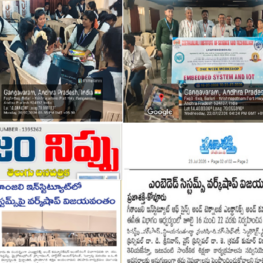
The Department of Electronics and Communication Engineering (ECE), Geethanjali Institute of Science & Technology (GIST), Nellore, successfully organized a One-Week Workshop for II-ECE Students on “Embedded Systems & Internet of Things (IoT)” from 16th July 2026 to 22nd July 2026. The workshop was conducted with the objective of equipping students with the latest knowledge and practical skills in embedded systems, microcontroller programming, sensor interfacing, wireless communication, and Internet of Things (IoT) technologies. The program was designed to bridge the gap between theoretical concepts and real-world industrial applications through a combination of expert lectures, interactive discussions, and extensive hands-on laboratory sessions.
The workshop commenced with an introduction to the fundamentals of Embedded Systems, where participants learned about embedded system architecture, the differences between microprocessors and microcontrollers, embedded hardware components, software development tools, and the design flow of embedded applications. Practical sessions familiarized students with the embedded development environment and basic programming concepts. As the workshop progressed, participants explored sensor interfacing techniques using various analog and digital sensors. They learned how to acquire sensor data, calibrate sensors, and display real-time information using embedded platforms. Practical demonstrations involving temperature, humidity, and environmental monitoring sensors provided students with valuable experience in integrating hardware components and understanding real-time data acquisition systems. These sessions enhanced their ability to design embedded applications capable of monitoring and controlling physical environments.
The IoT component of the workshop introduced participants to the architecture and principles of the Internet of Things. Students gained an understanding of IoT communication protocols, wireless networking concepts, cloud computing, and real-time data transmission. Special emphasis was placed on Wi-Fi-enabled embedded controllers such as the ESP32, enabling students to connect embedded devices to cloud platforms for remote monitoring and control. Practical exercises involved transmitting sensor data to cloud-based dashboards, visualizing live data, and understanding the role of cloud services in IoT ecosystems. These activities provided participants with practical exposure to designing connected systems capable of intelligent monitoring and automation.
During the later sessions, students worked on developing mini IoT projects that integrated sensors, embedded controllers, wireless communication, and cloud connectivity. They designed prototype applications related to smart home automation, environmental monitoring, industrial process monitoring, and smart agriculture. Working in teams, participants learned project planning, hardware integration, software development, testing, troubleshooting, and presentation skills.
The final day of the workshop featured project demonstrations, technical presentations, participant interactions, and a comprehensive feedback session. Students showcased their working prototypes and explained the design methodology, implementation process, and practical significance of their projects.
Feedback collected from the participants indicated a high level of satisfaction with the overall organization, quality of technical sessions, laboratory exercises, and practical demonstrations. Students appreciated the systematic presentation of concepts, interactive teaching methodology, and ample opportunities for hands-on experimentation. They expressed that the workshop improved their understanding of emerging technologies and motivated them to undertake innovative projects, research activities, and higher studies in Embedded Systems and the Internet of Things.
Overall, the One-Week Workshop on “Embedded Systems & Internet of Things (IoT)”, conducted from 16th July 2026 to 22nd July 2026, was a grand success and effectively achieved its intended objectives. The workshop served as an excellent platform for enhancing students’ technical knowledge, practical skills, and industry readiness. The Department of Electronics and Communication Engineering extends its sincere gratitude to the Management, Director, Principal, Vice Principal, Head of the Department, resource persons, faculty coordinators, technical staff, and all student participants for their invaluable support and contribution to the successful conduct of this academic initiative. The department looks forward to organizing similar skill-development programs in the future to promote innovation, experiential learning, and professional excellence among engineering students.